
Our Relationship to the Forest
What falls locally — a meditation on pulp mills, data centers, and learning from a rural town in Austria

Musical Pairing: Joni Mitchell's "Big Yellow Taxi," Patti Casey's "Stronger Than That," Hubert von Goisern's "Brenna Tuats Guat"
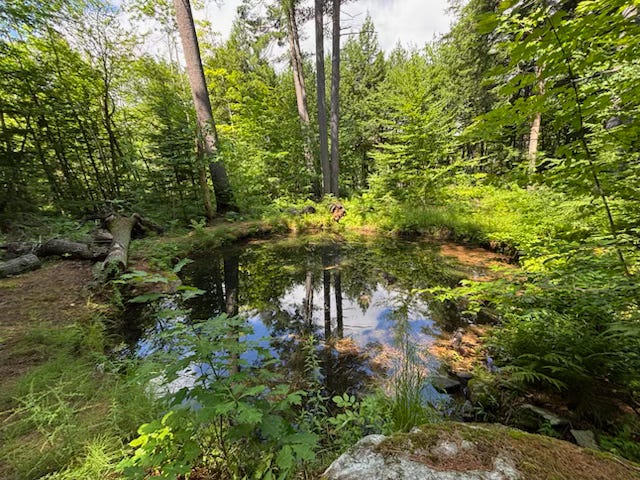
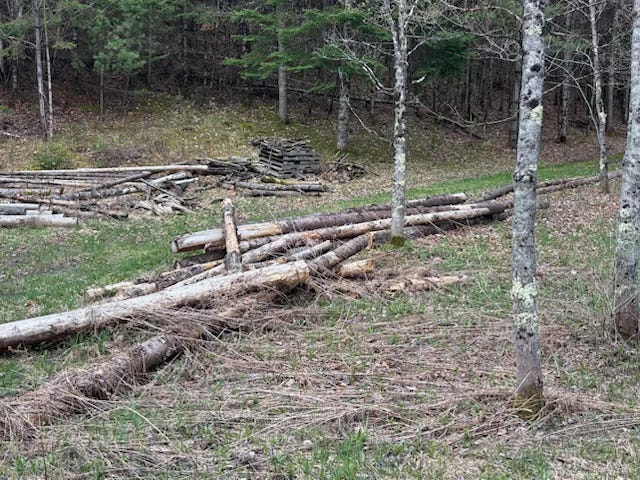
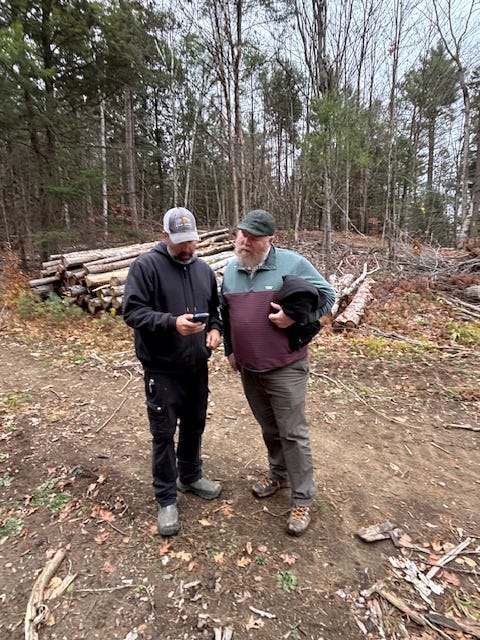
If you are anything like me you spend a lot of time in the forest. There is a stretch of woods I pass where someone’s clearly thinning — stumps still pale, a pile of tops and bent hemlock stacked at the edge of the skid road, waiting for someone to want it. I used to walk past that pile without much thought. Now I can’t stop looking at it and wondering: why don’t we value our local forest economy?
My question got a lot less rhetorical last week, when Finch Paper announced it will stop making its own pulp at its mill in Glens Falls, New York — and, with it, stop buying the low-grade wood that pulp production depends on. I understand to some of you, this may simply sound like a business-page footnote — sad for Glens Falls, not really about us. But here in Singing Bridge, close enough to feel the ripple, it landed differently. It landed like something in the web just gave way.
A forest is a relationship
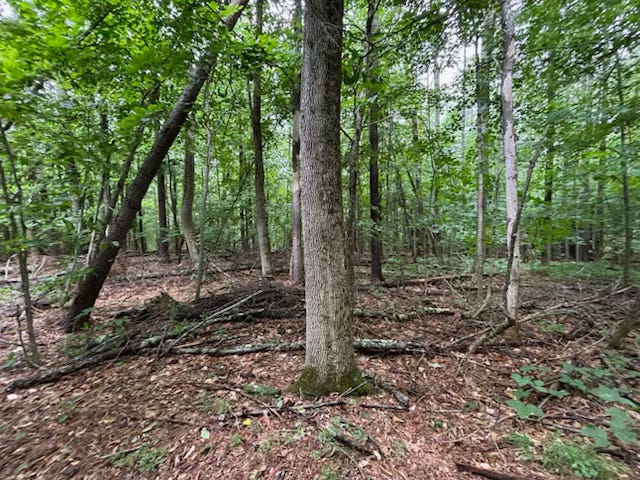
Recently, I have spent a lot of time with foresters and loggers and they have shared: a healthy stand needs thinning, and NOT just “high-grading” — taking only the expensive trees that are “salable” in today’s market. Our forests filled with crowded stands, bent trees, the blighted and invasive and low-value ones — they need to come out too so the strong trees find room to grow. Active management and forest stewardship respect the limits and rhythms of a living place instead of just extracting for short term profits from it.
Active management only happens if there’s a market for the low-grade wood. No forester and logging crew can afford to work in the woods and pull out the wood nobody will buy. So the whole practice of caring for a forest — depends on a forester's ability to walk that stand consistently, to keep listening to it long enough to know it well, to still be standing in those woods a decades from now. And that kind of relationship — the long, patient kind a healthy forest actually requires — only survives if the work that sustains it is work a person can also survive doing. It depends on there being a home for the parts nobody particularly wants, and a livelihood solid enough that the person doing the tending can keep coming back.
That’s the quiet job a pulp mill does. Not glamorous. But it’s the piece that lets the whole relationship keep functioning — the exchange that turns what a forest sheds into something a person can actually make a living wage to carry out.
VTDigger has done excellent reporting on the Finch news, and talked to Sam Lincoln, a logging contractor in Randolph Center and former deputy commissioner of Vermont’s Department of Forests, Parks and Recreation, who called the impact “enormous.” He’s not exaggerating. Oliver Pierson, the state’s director of forestry, estimated the mill was pulling in 50 to 80 truckloads of wood a day from around our region. That number doesn’t just quietly disappear — it’s a hole in a relationship between loggers and land, between towns and their own woods, and holes like that have a way of getting filled by something. Bill Sargent, a retired Vermont forester, put it plainly in that same reporting: take away the market for low-grade wood, and responsible forest management becomes nearly impossible.
And land nobody can afford to tend has a way of becoming land somebody else can afford to buy. A developer. Or, these days, a data center hunting for cheap rural power and a rural town government too worn down to say no. Nobody around here wanted that outcome. It happens because the signal that used to say this forest is worth valuing and caring for is rapidly going quiet.
We used to have this. Austria never lost it.
Here’s the part I keep coming back to, because it’s actually feels like tangible hope. The wood Finch Paper used to take — the tops, the slash, the bent hemlock, the low-grade cordwood — was never really waste. It only looks like waste inside a market that has forgotten what to do with it. Change the question you’re asking of it, and it becomes fuel.
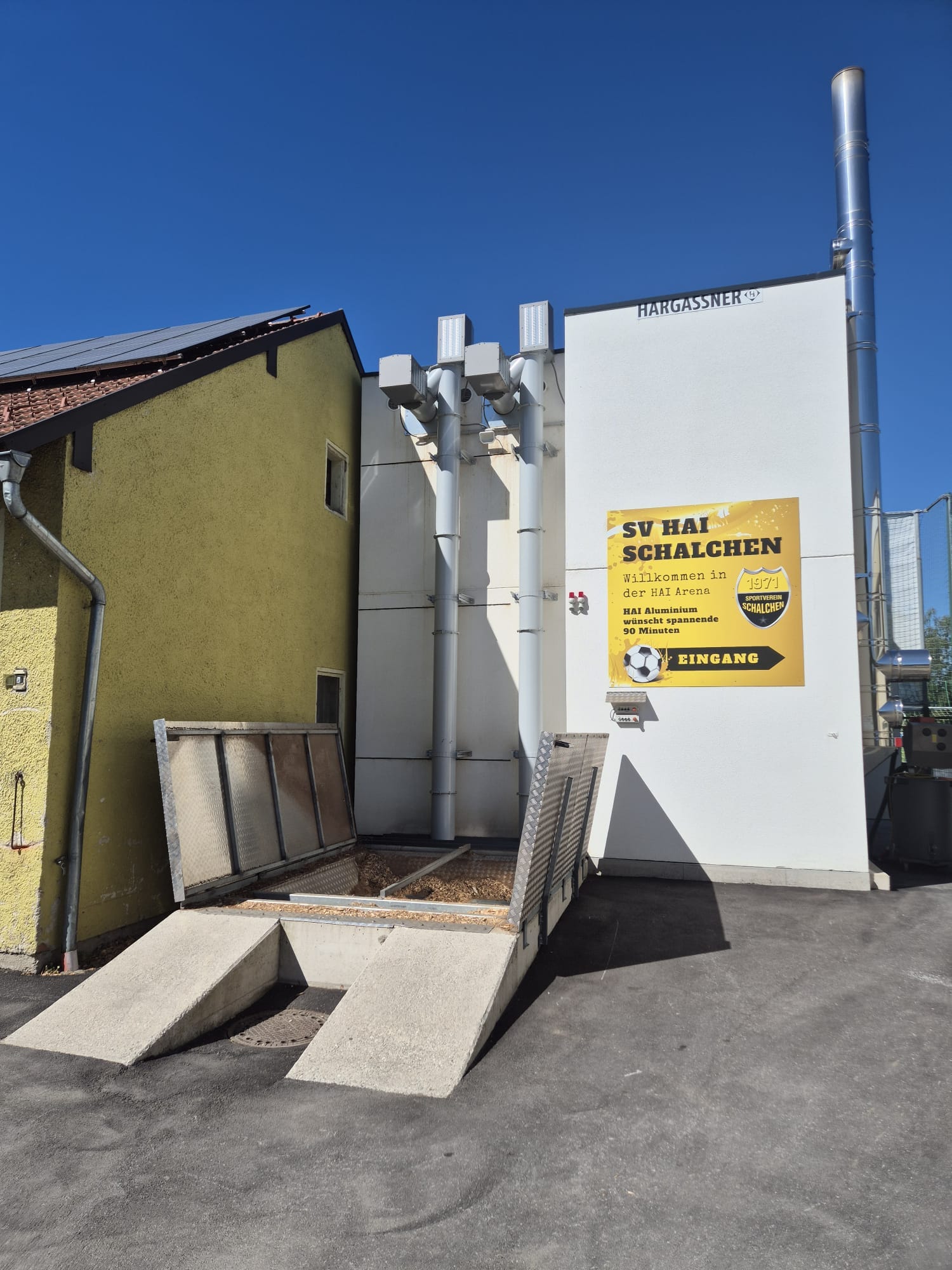
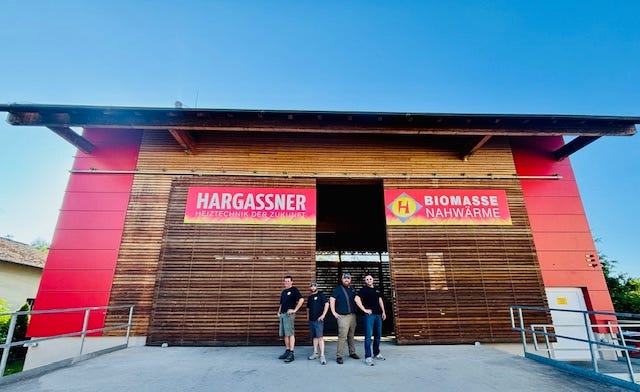
That loop has been running quietly across rural Austria for decades — small, farmer-owned wood-chip heating plants are common enough that nearly every town in some provinces has one — and it's alive right now in a town called Schalchen, about 3,900 people in the Innviertel region of Upper Austria, near the Bavarian border. On February 7, 2025, Schalchen officially opened its own Bioheizwerk — a wood-chip heating plant, built around a Hargassner boiler system — warming a cluster of town-owned buildings: the volunteer fire company's equipment house, the recreation hall, the town office, a clubhouse, the medical center, and a new education center. Fourteen local woodland owners banded together to supply the biomass under simple standing agreements with their neighbors. Nothing about the technology is fancy. What's different is that the town built a home for its own forest's leftovers instead of shipping the problem away and buying its heat from somewhere far off.
Mayor Andreas Stuhlberger said something at the ribbon-cutting that’s stuck with me: bringing the plant online sends a strong signal for climate protection and renewable energy — and, in the same breath, that the project isn’t just about protecting the environment, it’s about supporting the local economy. That’s not a marketing line — that’s the actual reason it works in a farm town that never set out to save the planet. It set out to take care of itself. The price of a chip gets set between neighbors, not decided on a trading floor an ocean away. Every dollar spent on heat stays in town instead of leaving on a truck or a pipeline. Fourteen families now get paid for wood that used to just be a headache to haul off.
From the woods to the woodstove, a very short trip
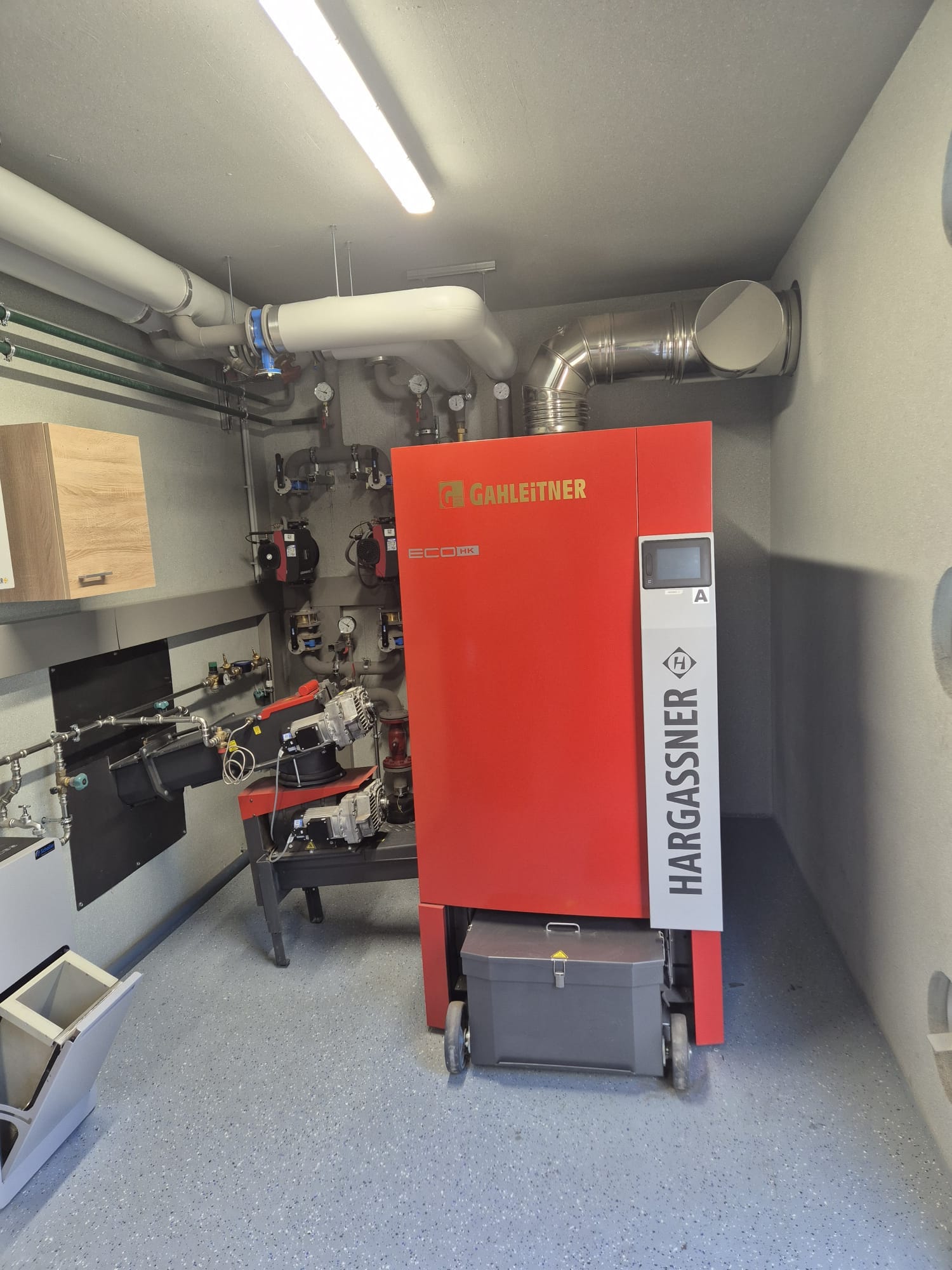
Picture the actual path this wood travels, because the shortness of it is the whole point. A logger thins a stand and pulls the low-grade wood out alongside the good sawlogs. A sawmill turns the logs into lumber and, in the process, makes chips and sawdust and slab wood almost as a byproduct. That low-grade material gets chipped or pressed into fuel, ready for a boiler like Schalchen’s. The boiler heats a school, a town hall, a handful of homes. And the money that would have drifted out of the county for propane or oil instead becomes a paycheck — for the landowner, for the next thinning job, for the logger who gets to keep doing work that actually helps the forest instead of just extracting from it.
Please note the elegant circle, not a one-way supply chain. Almost nothing has to leave that doesn’t need to. It’s the same pattern any healthy ecosystem runs on — small, local exchanges, close enough together to hold each other up. A mill closure two hundred miles away in Glens Falls can knock over a whole regional system built on distance. A web of small-town boilers can absorb that same shock, because the value in it never had far to travel to begin with.
Why this matters here, now
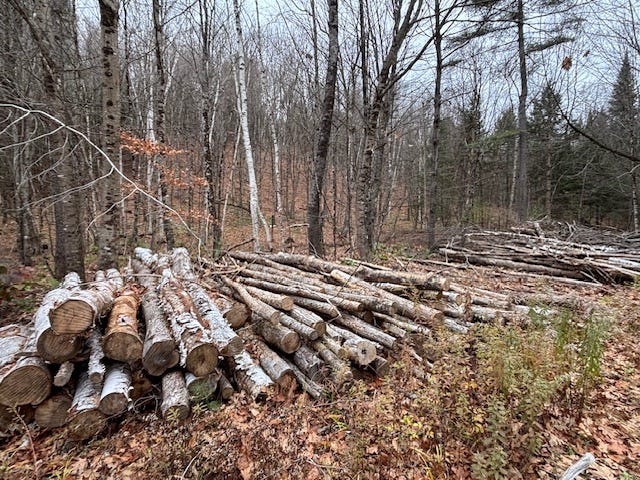
Our working land is being squeezed from two directions that are really one squeeze. The market for low-grade wood keeps shrinking, and with it goes the financial reason to manage a forest at all. And working lands that can’t earn their keep by being cared for becomes land that becomes low hanging fruit for the highest bidders. Read DEVELOPERS!
They paved paradise
Put up a parking lot
- Joni Mitchell, Big Yellow Taxi
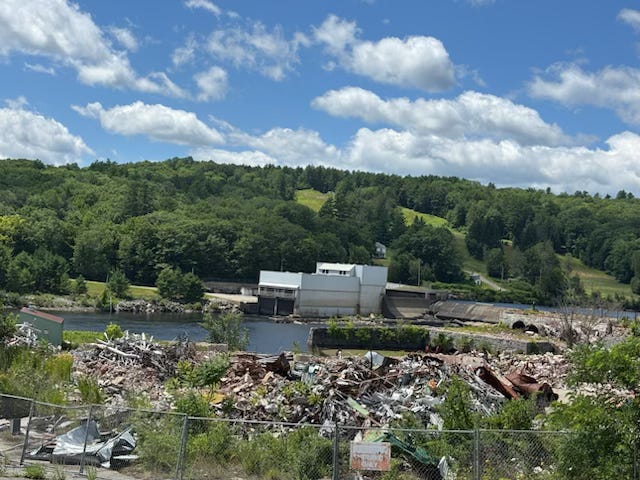
We don’t have to guess what that looks like. In Jay, Maine, the old Androscoggin paper mill — the heartbeat of that town for half a century — closed in 2023. What’s rising on the site now isn’t a new mill. It’s a proposed $550 million data center. AND that’s not a hypothetical. It is what happens to a working forest town when nothing local steps in to replace what a paper market used to do for it. It could be any of us.
Advanced wood heat isn’t nostalgia. It’s a bet that the most durable thing a rural place has — its standing forest, and the people who still know how to listen to and tend it — is worth building around, not paving over. I’ll be clear: nothing is built or even formally proposed in our corner of Vermont yet (as far as we know). A few towns nearby have started asking the question out loud. And curiosity is a good first step.
And here’s the part I need my fellow environmentalists to sit with: this is the climate fight, not a detour from it. A market for low-grade wood is what keeps a forest a forest instead of a new development’s back lot. Protecting these woods doesn’t mean protecting them from every axe — sometimes it means paying for the right one. Advanced wood heat, built at the scale of a town like Schalchen instead of the scale of a corporation, is one of the few tools left that pays a forest to keep standing.
The Finch news is a warning. Jay is the alarm bell. Schalchen is what it sounds like when a town answers it — building the local solution itself, at a size it can actually manage.
I keep thinking about that pile of slash at the edge of the skid road. It’s still sitting there — not because the person underestimates it’s worth, but because we haven’t built the place for it to go. Somewhere between the truth every forest already knows and the truth every short-supply-chain, circular economist already knows, there’s a simple equation waiting on us: when we live within planetary boundaries, circulate and share resources locally, we have everything we need. We haven’t valued that equation yet, not with the money and the market signals that would make it real. But standing here, looking at that pile, I think we are finally starting to ask the right question.
PS Let’s be clear that in a saner world we will pay people simply to keep a forest intact — to let it run its biotic pump, drawing moisture inland and stabilizing the rainfall patterns whole continents depend on; to connect health and wellness metrics to forest bathing — encourage all of us to spend more time in the forest — there is now real physiological evidence that time among trees lowers cortisol and blood pressure; to let us put our hands on the bark of something older than our grandparents and feel, for a moment, less alone in time. A standing forest does all of this quietly, continuously, FOR FREE — which in a world of money junkies this is not valued. We have no functioning ledger for what a healthy forest is worth left standing. Ecosystem services, natural capital, carbon sequestration — economists have coined the vocabulary, but none of it has found its way into an actual paycheck for the people whose daily labor is the difference between a tended forest and an abandoned one. Until we build that ledger, a market for low-grade wood is not the whole answer, but it is a tangible one: and it's one of the most realistic tools we have right now for making a forest worth more standing than sold. Call it a stopgap, a rough draft of the accounting we haven't yet learned to keep. It buys us time to figure out how to properly value a life-support system we still take for granted.
🪵🪵🪵🪵
More on the Finch Mill: By comparison, the biggest mills in Vermont take in something like 75 to 80 loads of wood a week — the Glens Falls yard alone was moving 60 loads a day, seven days a week, something like 20,000 truckloads a year, and there is nowhere else in the Northeast that buys low-grade hemlock pulp. The Professional Logging Contractors of the Northeast has said as much publicly, calling wood pulp “an anchor of the Northeast’s forest economy” and warning of severe revenue losses, layoffs, and reduced capacity to manage forest health across New York, New Hampshire, and Vermont. And this loss doesn’t stand alone: according to the New England Forestry Foundation, over the last two and a half years the region has already lost markets for nearly four million tons of wood — more than 350 truckloads a day, every day, mostly out of Maine.
Sources
Charlotte Oliver, “A New York paper mill is closing part of its operation. Vermont loggers are sounding the alarm,” VTDigger, July 20, 2026
Charlotte Oliver, “Enough with the excuses. Help Vermont’s loggers,” VTDigger, July 22, 2026
“PLC deeply concerned by announcement that Finch Paper, LLC will not purchase wood,” Vermont Business Magazine, July 20, 2026
Eric Kingsley, “Shifting Markets: Challenge or Opportunity?” New England Forestry Foundation
“Modernste Technologie: Neues Bioheizwerk in Schalchen eröffnet,” meinbezirk.at (Braunau), February 11, 2025
“Schalchen,” Wikipedia — location, population, and municipal details
“Visiting a District Heating Plant in Austria,” Green Building Advisor
Lori Valigra (Maine Monitor/Bangor Daily News), "Proposed data center ban would kill plans for old paper mill," The Maine Monitor, March 2026
Oh my! What important presences each of our trees are!! Celinamum
❤️ 🌳 ❤️